

Hello friends and welcome to Third Place Wine! If you’re new here grab a glass and join us by subscribing below.
If you want to read more of my posts, you can check them out here. Don’t forget to follow me on Instagram @thirdplacewine, and LinkedIn, too.

It’s be 2 years and 20 days since I last wrote. But who’s counting?
I'm back.
I don't have a great excuse. I do, however, have wine.
Two cuvées, actually. One of which is becoming vinegar as we speak. But we'll get to that.
Let's go.
Three rows
I left you sometime in 2024, at the beginning of the growing season. Armed with flowchart-level knowledge of viticulture and vinification, and the stubborn will to learn to make wine by just doing it.
As a refresher: I convinced a friend to let me take three rows of Riesling from a plot he was trying to sell near Lenningen, a Mosel-adjacent winegrowing area in Luxembourg's wine country. I called it Dernier Cru. This was partly a joke, but mostly an expression of self-awareness that I didn’t really know what I was doing, BUT… I was going to find out.
I was, for all intents and purposes, a hopeful weekend grape farmer, blissfully unaware of just how difficult the vintage would be. Despite the travails, it was the best vintage for learning, and that was the whole point anyway.
2024 presented almost every challenge from hail and frost to disease and volatile harvest weather. There were moments when I thought I wouldn’t make it to harvest, followed by moments when I thought I had royally messed up in the cellar (the jury is still out on that).
The whole thing was pretty emotional and it’s not even what I do for a living. Some people who do lost their crop.
Now, after two winters on the lees and bottling on the horizon, it’s a good time to share what cultivating those rows and coaxing wine (and vinegar) from them taught me: definitely more about wine than the previous three years studying it, but also several things that have nothing to do with wine at all.
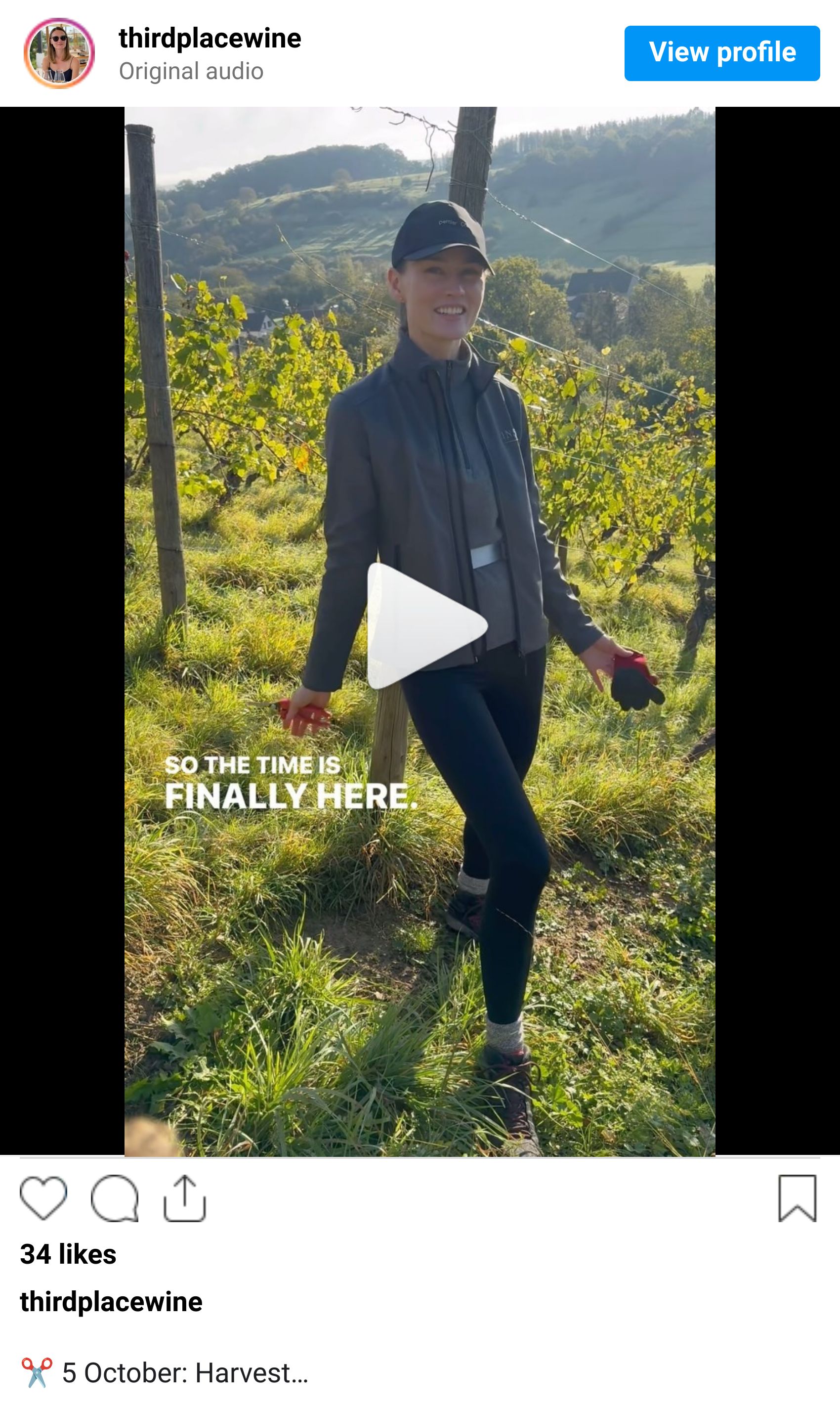
7 things I learned
1. You are not always in control.
The 2024 growing season was a lesson in letting go.
There are things you can do to try grow healthy grapes and to put your fingerprint on things. Ultimately, nature will decide what you will get.
You can’t control the weather, just like you can’t control markets, your batshit crazy neighbor, or how people decide to read your work. You do your best, and then you let go.
That was (is?) a hard one for someone like me.
2. Sometimes the best thing to do is nothing.
Winegrowing is also a brute force lesson in patience. There are moments when the best thing you can do is absolutely nothing. No adjustments, no interventions, no anxious checking.
In the vineyard and in the cellar, I always felt like I needed to do something. Every experienced person around me kept telling me to leave things alone. They were usually right.
Trust that the process is working and accept that time takes time. And leave your freaking wine alone.
3. People will help.
I had no business farming three rows of Riesling. I didn't know what I was doing, I had no equipment, and I didn’t even have a car (still don’t).
I did a lot of research, but inevitably books are inadequate when the rubber meets the road.
Whenever I didn't know what to do or how to do it, someone always appeared to teach me. And those “someones” were often highly-respected industry professionals. I often joked that it’s just too bad I had to be the one to implement their advice.
Honestly, if it weren’t for how random my story was I don’t think they would have even been interested to help. I mean, who does this? I think (hope?) they understood when they saw how delusionally dedicated I was that I was sincerely appreciative of their time. Worst case they were curious how it would all end, and I still got their help!
People are almost always happy to help someone who shows up genuinely curious and willing to work.
4. Get outside and scratch around in the dirt.
I have a desk job. I study. I spend a meaningful portion of my life in front of screens, in meetings. Inside.
I cannot overstate how good it feels to do something physical. The satisfaction of cultivating and creating something—something real—is grounding. Nature’s feedback is honest in a way that corporate culture rarely is. For better or worse, you will get credit for what you’ve done.
Dernier Cru has since been sold, and I’ll miss spending entire days among the vines—days that flew by in an instant.
If you work on a laptop for a living, find something that makes you use your hands.
5. Time waits for no one.
The vintage will not wait for you to feel ready.
At every stage, there is an action to take. Grapes develop and ripen on their schedule, not yours. Mildew doesn’t care that you have a day job and you can’t get out to spray in time again after the rain.
You are confronted with the ruthlessness of time throughout the entire winegrowing and winemaking process.
The sense of urgency this creates can make you feel anxious and paralyzed, or clear and determined. Your choice.
6. Get good at making decisions.
The word "decide" comes from the Latin de- meaning “off,” and caedere meaning “cut.” To decide is to cut off.
Wine is an accumulation of decisions. From the grape variety to the vessel, every choice you make from the vineyard to the cellar impacts the final result.
Because winemaking is a serial process, every decision necessarily precludes options down the line. You can’t just pass on decisions you don’t like or are unsure of. You could, I guess, but indecision is not neutral and its results are usually made worse with time.
The winemakers I admire most are not necessarily the most cautious ones although, perhaps, they are among the most compulsive. They are decisive, they know what they want, and they commit.
We’re talking about wine here, but we could easily say the same about life.
7. Know what you want.
At a certain point, I realized that unless I knew what I wanted, it didn’t matter what advice I got. That’s because at times even the people whose opinions I respected most contradicted one another, even if they were “right” for different reasons.
The only way to navigate this was to know what I wanted. Not perfectly. Not with complete certainty. But enough to be able to evaluate the advice against something, to know which counsel applied to my situation and which didn't.
Or, at the very least, to know when advice was pointing out a blind spot that I needed to research. For this, “Why?” was a very useful question. It not only helped me to learn, but also revealed dogmatic or egotistical answers.
Be devoted to your goal, but have the humility to be agnostic about how you achieve it.
What else happened while I was gone
After making it through the 2024 vintage, I started a part-time Masters in Corporate Communications at Erasmus University (Rotterdam) for my day job (which has also changed).
I continued helping out with harvest in Burgundy and Luxembourg.
I joined the Golden Vines Academy.
I organized the inaugural TPW Field Trip to Bordeaux.
TPW got mentioned in ELLE Luxembourg!
I kept running Flight Club, then at the beginning of this year, expanded events from a handful a year to monthly (Aperitivo, BYOB, and Flight Club formats) so that the community could get together more regularly.
Somewhere in all of that, I stopped writing. Not because I ran out of things to say. The opposite, actually. I had so much material and so little bandwidth that writing started to feel overwhelming. So, I let it sit.
Now, I’m starting again. Imperfectly, but I’m going for it.
What's next
Cuvée Luna is going to be bottled, hopefully sooner rather than later. I will absolutely report back.
I am preparing for Third Place Wine’s first international collaboration—a Spanish-themed BYOB with NOTK in Rotterdam on 15 May. If you or someone you know will be around, join us! Just email: [email protected] and we’ll take it from there.
Then, I’ll be preparing for the next Flight Club in June on Riesling, a grape I now have a rather personal relationship with. My intent is to draft some nerdy pre-reading for everyone to enjoy. Stay tuned!
And then there's this: I'm writing my Masters thesis on how independent communities like this one are built, and what makes people feel that they genuinely belong. Which means this newsletter is, improbably, now also coursework.
I’d be grateful for your help in the research by filling out this survey on community. Your answers will shape both the thesis and where TPW goes next — so in a very direct sense, you'd be helping to build the thing you're already part of. If you’ve already filled this in via another channel, no need to do it again.
More soon.
Finally
If you've been here a while: thank you for still being here.
If you're new: welcome. Subscribe, and if you know one person who loves wine and would enjoy this, forward it to them.
Support the newsletter
Third Place Wine is an after‑hours project squeezed in between work, study, and my very fragile sleep schedule.
If you look forward to these emails, a one‑time contribution is a lovely way to say “keep going” and helps me keep sharing, experimenting, and growing our wine community.
